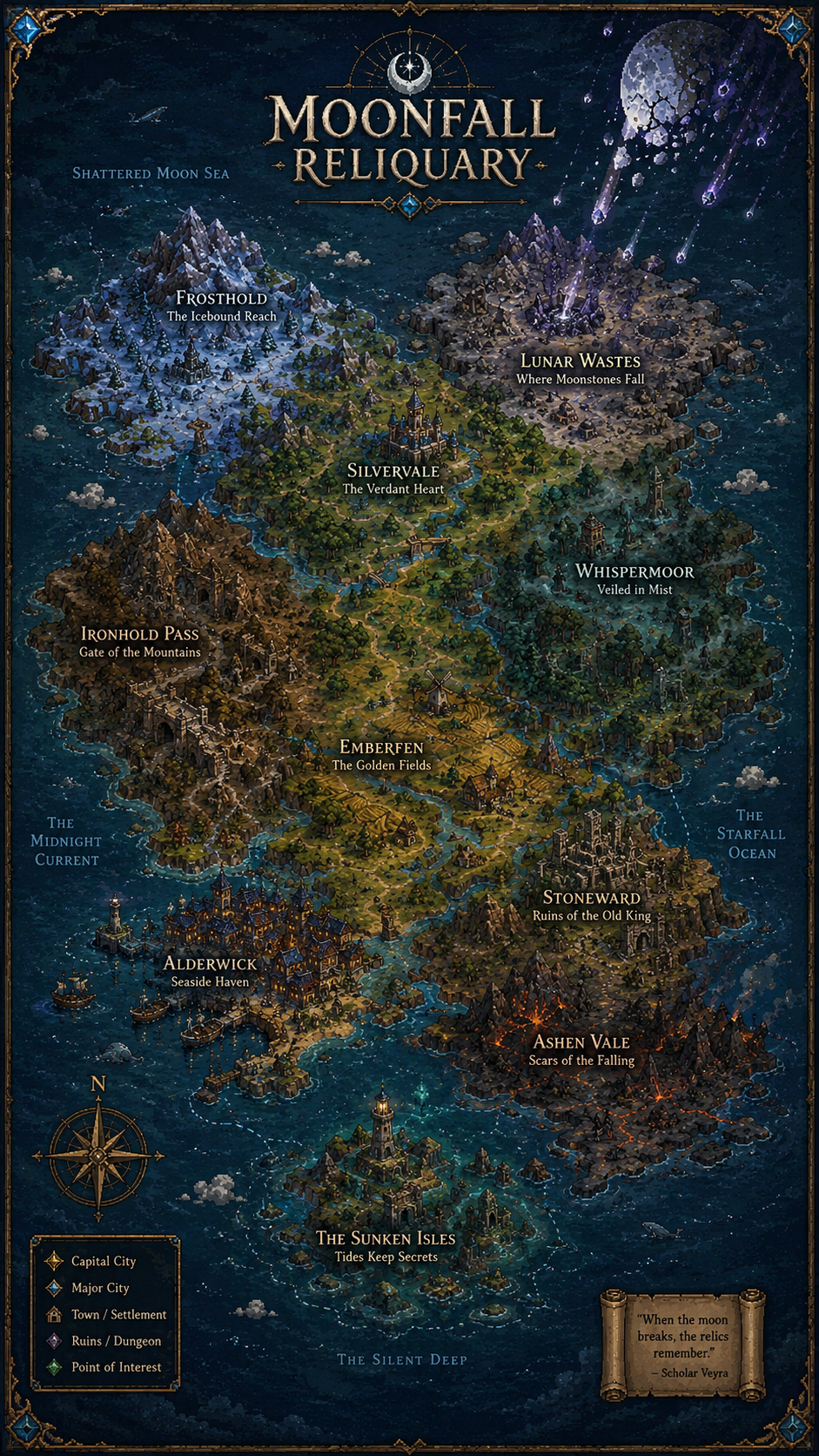
Moonfall Reliquary is a story-driven dungeon RPG currently in development, set in a fading archipelago where the moon has cracked open and begun raining ancient machinery into the sea. Players guide a small band of relic-hunters, exiles, and oathbound knights as they explore ruined sanctuaries, solve mechanical puzzles, and uncover why the world's old gods sealed themselves beneath the tides.
The game combines classic top-down exploration with turn-based battles and puzzle-heavy dungeons. Each island acts as a miniature mystery, with towns, wilderness routes, and a major reliquary dungeon built around a central mechanic. One dungeon might revolve around rotating mirrored bridges, while another asks players to flood and drain chambers to expose hidden passageways.
Combat is designed around momentum rather than simple attrition. Characters build "Resolve" by exploiting enemy weaknesses, guarding allies, or solving battlefield conditions. Resolve can then be spent on linked techniques, emergency defenses, or relic awakenings that briefly alter a character's role in battle.
Outside of combat, each party member has a field skill. Mara can translate broken moon-script, Edrin can bind loose gears and chains, Sella can commune with dormant spirits, and Brant can smash unstable stonework. Dungeons are built so that party composition changes how players read the environment, encouraging backtracking without making it feel like filler.
The game's major influences include Lufia II: Rise of the Sinistrals, especially its mixture of dungeon puzzles, monster encounters, and emotionally earnest fantasy adventure. Other inspirations include classic 16-bit RPGs, early handheld Zelda-style puzzle design, and modern indie games that reward careful observation over quest-marker chasing.
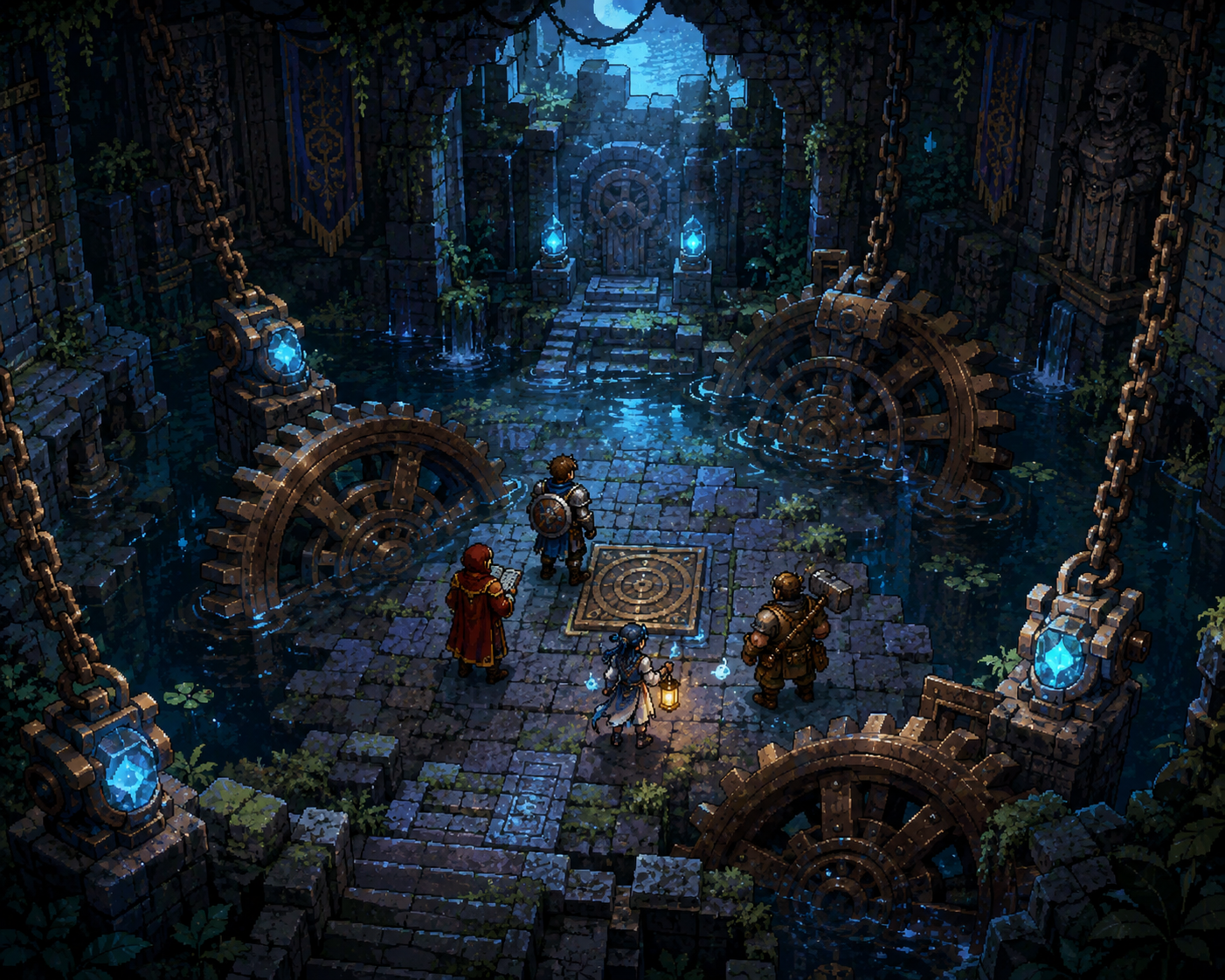
Puzzles are intended to feel tactile and readable. The player pushes statues, redirects light beams, raises platforms, changes water levels, and manipulates ancient machines. Many rooms have optional "elegant solutions" that reward players with lore tablets, rare crafting materials, or shortcuts back to the entrance.
The story centers on the Reliquary itself, a legendary vault said to contain the first memory of creation. Every faction wants it for a different reason: scholars seek truth, kings seek weapons, priests seek proof, and the moonfallen machines seem to be searching for it on their own. The party gradually realizes that saving the world may require refusing the power everyone else is chasing.
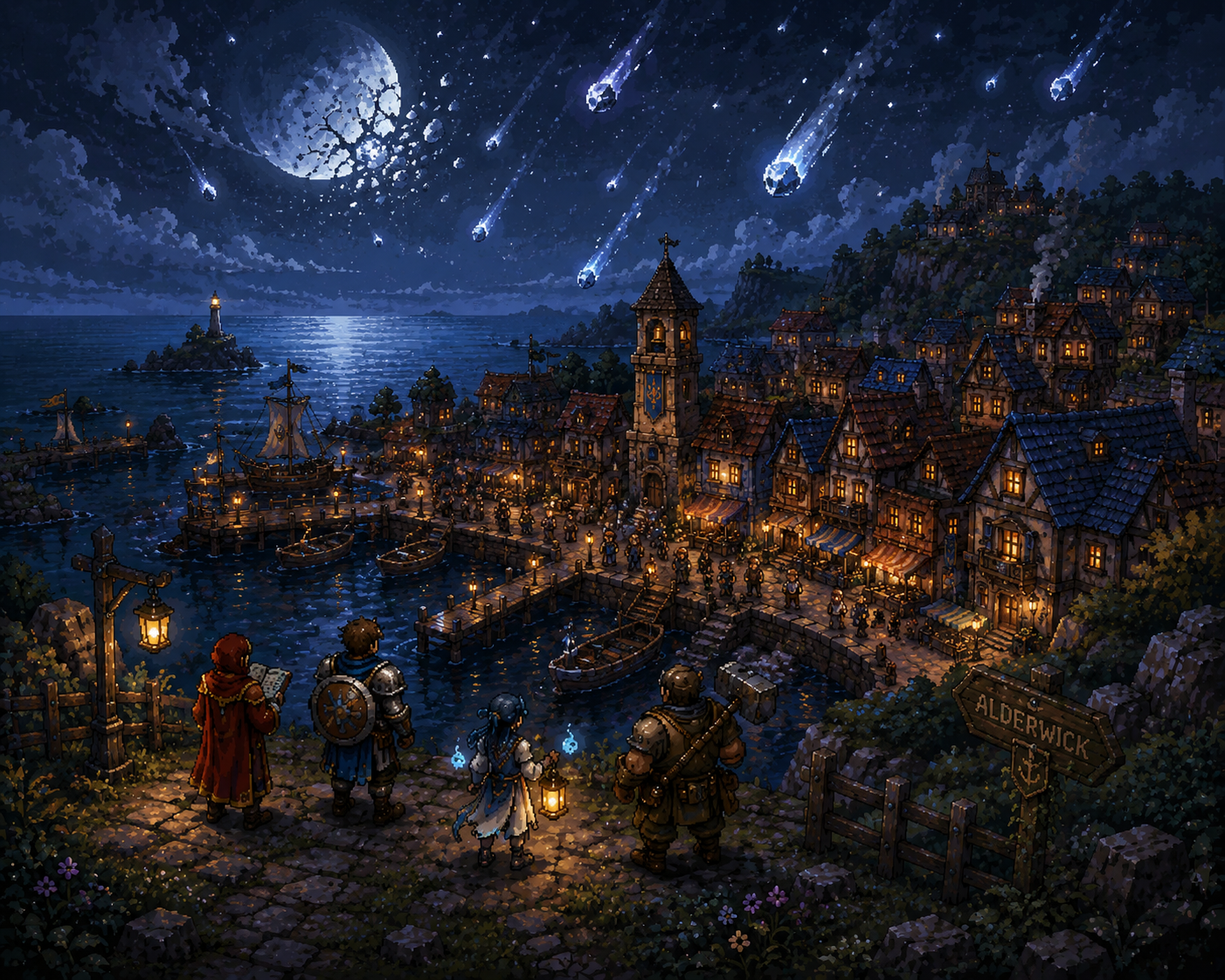
Progression is built around relic customization rather than simple equipment upgrades. Weapons and armor can be fitted with moonshards that change their properties, such as turning a sword strike into a lightning arc or allowing a shield to counter magical attacks. Players can specialize characters heavily or create hybrid builds for unusual party strategies.
Moonfall Reliquary aims to feel like a lost cartridge from the golden age of RPGs, but with modern pacing, cleaner interfaces, and deeper tactical choices. Its goal is not nostalgia for its own sake, but the rediscovery of a particular kind of adventure: dangerous ruins, clever rooms, strange machines, heartfelt companions, and the thrill of wondering what lies beneath the next staircase.